Introduction: Why Home Solar Storage Is Becoming the Future of Energy
For many homeowners, solar panels were once considered a simple way to reduce electricity bills. However, the energy landscape is changing rapidly. Rising electricity prices, grid instability, extreme weather events, and the growing demand for energy independence are pushing more households to combine solar panels with battery storage.
A home solar energy storage system allows homeowners to generate electricity during the day, store unused energy, and use it when electricity demand is higher or when the grid goes down. Instead of sending excess solar power back to the grid, homeowners can keep more of their own energy and improve overall energy efficiency.
A modern solar + battery system is no longer just an optional upgrade. It is becoming a key component of residential energy management.
This guide explains how home solar storage systems work, what components they include, how to calculate the right system size, what factors affect cost, and how to choose the best solution for your home.
1. What Is a Home Solar Energy Storage System?
A home solar energy storage system is a complete energy solution that combines solar panels, batteries, inverters, and intelligent energy management technology.
Unlike a traditional solar installation that only produces electricity when sunlight is available, a solar storage system allows homeowners to store electricity and use it later.
A typical system includes:
- Solar panels
- Solar inverter
- Battery storage system
- Battery management system (BMS)
- Energy monitoring software
- Backup power equipment (optional)
The basic energy flow looks like this:
Solar panels → Inverter → Home appliances + Battery storage
During sunny hours:
- Solar panels generate electricity
- The home uses the electricity it needs
- Excess electricity charges the battery
At night or during power outages:
- The battery supplies stored electricity
- The home continues receiving power without relying completely on the grid
This creates a more flexible and reliable energy system.
2. How Does a Solar + Battery System Work?
2.1 Solar Energy Generation During the Day
Solar panels convert sunlight into direct current (DC) electricity through the photovoltaic effect.
Because household appliances use alternating current (AC), the inverter converts DC electricity into usable AC power.
During peak sunlight hours, solar production is usually higher than household consumption. Without battery storage, the extra electricity is either sent back to the grid or wasted depending on local regulations.
With a battery system, the surplus electricity can be stored for later use.
2.2 Energy Storage and Nighttime Usage
The battery is the core component that separates a standard solar system from a complete solar storage solution.
For example:
A family may produce 30 kWh of solar electricity during the day but only use 15 kWh immediately.
Without storage:
- 15 kWh may be exported to the grid
With storage:
- The extra 15 kWh can charge the battery
- The family can use it after sunset
This allows homeowners to increase solar self-consumption and reduce dependence on utility companies.
2.3 Backup Power During Grid Outages
One of the biggest advantages of a home battery storage system is backup capability.
Traditional grid-connected solar systems usually shut down during a power outage for safety reasons. A battery storage system with backup functionality can continue supplying electricity to selected home circuits.
Common backup loads include:
- Refrigerators
- Internet equipment
- Lighting
- Security systems
- Heating and cooling equipment
For homeowners living in areas affected by storms, wildfires, or unreliable grids, battery backup can provide significant peace of mind.
3. Main Components of a Home Solar Storage System
3.1 Solar Panels
Solar panels are responsible for generating electricity.
The performance of solar panels depends on several factors:
- Panel efficiency
- Power output
- Temperature coefficient
- Degradation rate
- Warranty period
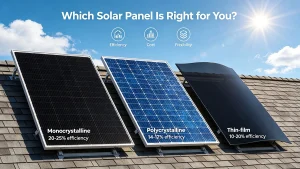
Modern residential systems typically use high-efficiency monocrystalline solar panels because they provide strong performance with limited roof space.
(Internal link: Solar Panel Buying Guide)
3.2 Solar Inverter
The inverter acts as the control center of the solar system.
Its main functions include:
- Converting DC electricity into AC electricity
- Managing energy flow
- Monitoring system performance
- Connecting solar panels and batteries
There are several inverter configurations, including:
- String inverters
- Microinverters
- Hybrid inverters
For solar + battery systems, hybrid inverters are becoming increasingly popular because they can manage both solar production and battery charging.
3.3 Battery Storage System
The battery determines how much electricity can be stored and how long the system can provide power.
The most common residential battery technologies include:
Lithium Iron Phosphate (LFP)
LFP batteries have become the preferred choice for many residential applications because they offer:
- Long cycle life
- High safety performance
- Stable chemistry
- Lower maintenance requirements
Nickel Manganese Cobalt (NMC)
NMC batteries provide high energy density but generally require more careful thermal management.
(Internal link: LFP vs NMC Battery Comparison)
4. How to Choose the Right Solar Battery Size?
Choosing the correct battery capacity is one of the most important decisions when designing a home solar storage system.
Battery size is usually measured in kilowatt-hours (kWh).
The right size depends on:
4.1 Household Energy Consumption
Start by checking your daily electricity usage.
For example:
- Small household: 10–20 kWh/day
- Medium household: 20–40 kWh/day
- Large household: 40+ kWh/day
A larger home with electric heating, air conditioning, or electric vehicles may require more storage capacity.
4.2 Backup Requirements
Some homeowners only want backup power for essential appliances.
Others want whole-home backup.
The required battery size will be different.
Essential backup:
- Refrigerator
- Lights
- Wi-Fi
- Small appliances
Whole-home backup:
- HVAC systems
- Electric water heaters
- EV chargers
(Internal link: Home Solar Storage Sizing Guide)
4.3 Solar Production
The relationship between solar panel capacity and battery size is also important.
A battery that is too small may fill quickly and waste solar production.
A battery that is too large may increase system cost without providing additional value.
The goal is to balance:
Solar generation + household consumption + storage capacity
5. How Much Does a Home Solar Battery Storage System Cost?
The cost of a residential solar storage system depends on:
- Battery capacity
- Solar panel size
- Equipment quality
- Installation complexity
- Local incentives
- Backup requirements
A complete system usually includes:
- Solar panels
- Battery
- Inverter
- Installation
- Monitoring system
Although battery storage increases upfront investment, many homeowners consider it worthwhile because of:
- Lower electricity costs
- Energy independence
- Protection against rising utility rates
- Backup power security
(Internal link: Solar Battery Storage Cost Analysis)
6. Benefits of Installing a Solar + Battery System
6.1 Reduce Electricity Bills
By storing excess solar energy, homeowners can use more of their own electricity instead of purchasing power from the grid.
This is especially valuable in regions with:
- High electricity prices
- Time-of-use electricity rates
- Reduced solar export compensation
6.2 Increase Energy Independence
A solar storage system gives homeowners greater control over their energy supply.
Instead of depending entirely on utility companies, homeowners can produce, store, and manage their own electricity.
6.3 Improve Energy Security
Extreme weather events are becoming more common in many regions.
Battery storage provides an additional layer of protection when grid reliability becomes a concern.
7. How to Choose the Best Home Solar Storage System
When comparing different systems, homeowners should consider:
Battery Quality
Look for:
- Long warranty periods
- High cycle life
- Proven safety certifications
System Compatibility
The battery should work well with:
- Existing solar panels
- Inverters
- Smart energy management platforms
Future Expansion
A good system should allow additional battery capacity if energy needs increase.
Installer Experience
Professional installation is critical for system performance, safety, and long-term reliability.
8. The Future of Residential Solar Energy Storage
The future of home energy is moving toward smarter and more integrated systems.
Future solar storage solutions will combine:
- Artificial intelligence energy management
- Smart home technology
- Electric vehicle charging
- Dynamic electricity pricing
- Virtual power plants
Solar panels and batteries will no longer operate as separate devices. They will become part of a connected home energy ecosystem.
Conclusion: Is a Home Solar Energy Storage System Worth It?
A home solar energy storage system provides more than just lower electricity bills. It gives homeowners greater control, reliability, and flexibility over their energy future.
By combining solar panels with battery storage, households can maximize renewable energy usage, reduce dependence on the grid, and prepare for a changing energy landscape.
For homeowners considering solar, the key question is no longer only:
“Can solar panels save money?”
The more important question is:
“How can solar energy storage help me use my own clean energy whenever I need it?”