7 Benefits of Ground-Mounted Solar Systems
Ground-mounted solar systems offer homeowners, farms and small businesses a flexible way to generate renewable energy without installing panels on a roof.
Instead of attaching solar modules to a building, a ground-mounted system uses a dedicated racking structure secured to the land. This gives the system designer greater control over panel location, orientation, tilt and future expansion.
Ground-mounted solar is particularly suitable for rural properties, large residential lots, farms, workshops and off-grid locations. It can also be a practical alternative when a roof is too small, heavily shaded, poorly oriented or unsuitable for supporting solar equipment.
If you have sufficient open land, here are seven important benefits of choosing a ground-mounted solar system.
1. Better Panel Placement and Solar Exposure
One of the biggest advantages of ground-mounted solar panels is the freedom to choose where the array will be installed.
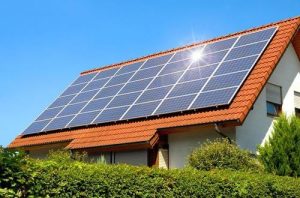
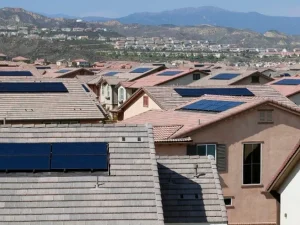
Rooftop systems are limited by the existing characteristics of the building, including:
- Roof orientation
- Roof pitch
- Chimneys and vents
- Nearby trees
- Adjacent buildings
- Available roof area
- Structural limitations
- Multiple roof sections
A ground-mounted array can be positioned in a more open area with fewer shading problems. Installers can also select an appropriate orientation and tilt angle based on the location, weather conditions and energy-production goals.
In the Northern Hemisphere, fixed solar panels are commonly oriented toward the south to maximize annual production. The ideal angle depends on the property’s latitude, seasonal energy demand, wind conditions and local climate.
The U.S. Department of Energy notes that panel tilt and orientation affect solar production. It also emphasizes that the mounting structure must withstand wind, rain, hail and corrosion over many years. U.S. Department of Energy
Better placement may result in:
- More hours of direct sunlight
- Lower shading losses
- Improved annual energy production
- More predictable solar output
- Greater freedom in system design
Ground mounting does not guarantee higher production than rooftop solar. The result depends on the site. However, it gives the system designer more opportunities to optimize the array.
2. Easier Inspection, Cleaning and Maintenance
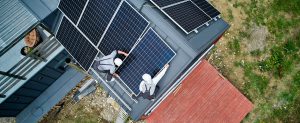
Ground-mounted solar systems are generally easier to access than rooftop arrays. Panels, wiring, mounting hardware and nearby equipment can often be inspected without climbing onto a roof.
This accessibility makes routine tasks easier, including:
- Checking panels for visible damage
- Removing leaves and debris
- Cleaning excessive dust or bird droppings
- Inspecting bolts and mounting hardware
- Monitoring vegetation around the array
- Checking exposed conduit and cable protection
- Clearing snow where it is safe to do so
Easier access can reduce the time and labor required for maintenance. It can also make it easier to identify potential problems before they affect the entire system.
Solar panels do not necessarily need frequent cleaning. Rain may remove much of the ordinary dirt in some regions. The value of cleaning depends on local conditions, including dust, pollen, pollution, bird activity and rainfall.
Claims that cleaning always increases output by a specific percentage should be avoided. The actual improvement depends on how heavily the panels are soiled.
Before cleaning solar panels:
- Follow the module manufacturer’s instructions.
- Shut down the system when required.
- Avoid abrasive materials and harsh chemicals.
- Do not use cold water on extremely hot panels.
- Never touch damaged wiring or connectors.
- Contact a qualified technician if electrical damage is suspected.
Ground-level access makes panel care more convenient, but the array still generates DC electricity whenever sunlight reaches the modules.
3. More Flexibility for Future Expansion
A ground-mounted solar system can be easier to expand when additional land and electrical capacity are available.
This is useful for homeowners who want to begin with a smaller installation and increase capacity as their energy requirements change.
Future electricity consumption may rise after:
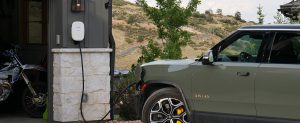
- Purchasing an electric vehicle
- Installing a heat pump
- Adding electric water heating
- Building a detached workshop
- Creating a home office
- Adding a guesthouse or accessory dwelling unit
- Installing greenhouse equipment
- Expanding agricultural operations
- Adding battery storage
- Moving toward off-grid living
With a suitable system design, additional panels may be installed beside the original array. This avoids some of the roof-space limitations that affect residential rooftop systems.
However, solar expansion is not always as simple as attaching more panels. Before increasing system size, check:
- Inverter input capacity
- Charge-controller limits
- Battery charging capacity
- Cable and conduit sizing
- Electrical protection requirements
- Utility interconnection limits
- Local permitting rules
- Available space and row spacing
- Compatibility with existing solar modules
If future expansion is part of your plan, it is best to include it in the original system design. Oversizing selected electrical infrastructure during the first installation may make later expansion easier and more cost-effective.
4. Productive Use of Open Land
Ground-mounted solar can transform an unused section of a property into a long-term source of electricity.
Potential installation locations include:
- Open backyards
- Side lots
- Rural properties
- Farms and ranches
- Land beside workshops
- Areas near barns or garages
- Remote cabins
- RV parking locations
- Commercial properties with unused land
This can be especially valuable when rooftop solar is unsuitable because the roof is shaded, aging, poorly oriented or reserved for another purpose.
A ground array also allows homeowners to keep solar equipment away from the main building. This can preserve roof appearance and avoid the need to remove panels when future roof repairs are required.
Site selection must still account for:
- Underground utility lines
- Drainage and flood risk
- Soil conditions
- Property boundaries
- Easements
- Septic systems
- Future construction plans
- Trees and long-term shading
- Access for maintenance
- Local setback requirements
Solar installations are long-term property improvements. The selected area should remain suitable throughout the expected operating life of the system.
5. Potential for Better Panel Cooling
Solar modules typically produce less power as their operating temperature increases. Adequate airflow behind the modules helps dissipate heat.
Ground-mounted panels are usually installed with open space around and behind the array. This may provide good natural ventilation compared with some roof-mounted installations where panels sit relatively close to the roof surface.
Improved airflow may help:
- Reduce module operating temperature
- Support more consistent warm-weather performance
- Limit heat accumulation beneath the array
- Improve access for inspection
- Extend the life of nearby system components
The actual temperature difference depends on mounting height, module design, wind, climate, surrounding vegetation and array layout.
The area below and around the panels should be maintained to prevent tall vegetation from shading modules or interfering with wiring. Vegetation control should be planned without damaging cables, foundations or equipment.
6. Suitable for DIY-Oriented Projects
Ground-mounted solar can be more approachable for experienced DIY homeowners because much of the physical work takes place at ground level.
There is no need to carry panels onto a roof, work near roof edges or attach mounting hardware through roofing materials. Installers also have greater visibility and space when assembling the racking.
A typical project may involve:
- Evaluating solar exposure and shading
- Confirming boundaries and underground utilities
- Designing the array layout
- Selecting an approved racking system
- Preparing foundations or ground anchors
- Assembling the mounting structure
- Installing solar modules
- Routing conduit and wiring
- Connecting the inverter or charge controller
- Inspecting and commissioning the system
Although ground mounting may simplify physical access, it is not automatically a simple or permit-free project.
The structure must be engineered for:
- Local wind speed
- Snow load
- Soil type
- Frost depth
- Corrosion exposure
- Panel weight
- Foundation uplift
- Equipment grounding
Electrical work must comply with applicable codes. Grid-connected systems may also require permits, utility approval, inspections and an interconnection agreement.
DIY homeowners may be able to complete selected mechanical work, but electrical connections and system commissioning should be handled or verified by qualified professionals when required.
7. Easy Integration with Battery Storage
Ground-mounted solar panels can be paired with a battery storage system to increase energy control and provide backup power.
During the day, the solar array can supply household loads and charge the battery. Stored energy can then be used:
- At night
- During cloudy periods
- During peak electricity-rate periods
- During grid outages
- When solar output is lower than household demand
A solar-plus-storage system may help homeowners:
- Increase solar self-consumption
- Reduce peak-rate electricity purchases
- Maintain selected critical loads
- Reduce dependence on the utility grid
- Support remote or off-grid properties
- Store excess energy instead of exporting it
Battery storage does not automatically provide outage protection. A grid-connected system normally requires compatible backup equipment that can safely isolate the home from the utility grid during an outage.
The battery, inverter, solar array and backup interface must be designed as one compatible system.
Ground-Mounted vs Rooftop Solar
| Factor | Ground-mounted solar | Rooftop solar |
|---|---|---|
| Space required | Requires open land | Uses existing roof area |
| Orientation | Can usually be optimized | Limited by roof direction |
| Tilt angle | More design flexibility | Often follows roof pitch |
| Maintenance access | Generally easier | May require roof access |
| Expansion | Easier when land is available | Limited by usable roof area |
| Installation cost | May require foundations and trenching | Uses the existing building structure |
| Cooling | Often benefits from open airflow | Airflow depends on mounting height |
| Roof impact | Does not affect the roof | May require roof penetrations |
| Shading | Location can be selected carefully | Depends on roof surroundings |
| Permitting | May involve zoning and setbacks | May involve structural and roof permits |
| Security | More accessible at ground level | Harder for unauthorized people to reach |
| Best suited for | Large lots, farms and off-grid sites | Homes with suitable roofs and limited land |
Fixed Ground Mount vs Pole Mount vs Solar Tracker
There are several types of ground-mounted solar systems.
Fixed-tilt ground mount
Fixed-tilt systems hold the panels at one selected angle. They are relatively simple, durable and widely used for residential projects.
Pole-mounted solar system
A pole-mounted array raises the solar panels above the ground using one or more poles. This may help avoid some obstacles and can provide adjustable tilt options.
Solar tracking system
A tracker changes panel orientation during the day or season to follow the sun. Tracking may increase production but also adds moving components, cost and maintenance requirements.
For many homeowners, a fixed-tilt system provides a good balance between energy production, cost and long-term reliability.
Potential Disadvantages of Ground-Mounted Solar
Ground-mounted solar has many advantages, but it also involves several trade-offs:
- It occupies usable land.
- Racking and foundations may increase installation cost.
- Long cable runs may require trenching.
- Local zoning rules may restrict placement.
- Equipment can be more accessible to children, animals or unauthorized visitors.
- Landscaping and vegetation need ongoing management.
- The structure must withstand local wind and snow conditions.
- Poor placement can affect drainage or future land use.
The best choice depends on the property. A roof-mounted system may be more economical when the roof has good solar exposure and adequate structural condition.
How Much Space Does a Ground-Mounted Solar System Need?
The required land area depends on:
- Number and dimensions of panels
- Total system capacity
- Panel tilt
- Row spacing
- Winter shading
- Maintenance access
- Local setbacks
- Equipment placement
- Whether the array uses tracking
Panels should not be packed together without considering shadows from one row falling onto the next. A professional site plan can estimate the appropriate spacing based on the lowest seasonal sun angles.
How to Choose the Right Installation Location
Before installing a ground-mounted solar system, evaluate the following:
Solar exposure
Look for an open location with minimal shading throughout the year—not only at the time of inspection.
Orientation and tilt
In the Northern Hemisphere, south-facing modules commonly maximize annual production, although southeast- or southwest-facing arrays may better match certain consumption patterns.
The Department of Energy reports that, in much of the continental United States, south-facing fixed arrays with tilt angles broadly between 15 and 40 degrees can provide strong production. The final angle must also account for wind and weather conditions. U.S. Department of Energy installation guidance
Soil and foundations
Soil type affects whether the system should use concrete footings, driven piles, helical anchors or another approved foundation.
Distance from the home
Longer cable runs can increase installation cost and electrical losses. Equipment location should be considered during system design.
Drainage
Avoid areas with standing water, erosion or significant flood risk unless the system has been engineered for those conditions.
Local requirements
Verify permits, setbacks, height restrictions, utility rules and homeowners’ association requirements before purchasing equipment.
Frequently Asked Questions
Are ground-mounted solar panels more efficient?
The panels themselves are not inherently more efficient. However, ground mounting can allow better orientation, tilt, airflow and shading control, which may improve total energy production.
Is ground-mounted solar cheaper than rooftop solar?
Not always. Ground-mounted systems may require additional racking, foundations, trenching and site preparation. They may still offer better long-term value when the roof is unsuitable or the array needs to be expanded.
Can I install ground-mounted solar myself?
Some experienced homeowners can complete parts of the installation. Structural design, permits, electrical connections and grid interconnection may require licensed professionals.
Do ground-mounted solar panels need planning permission?
Requirements vary by location. Ground-mounted arrays may be subject to building permits, zoning approval, setbacks, height restrictions and electrical inspections.
Can ground-mounted solar panels power an entire home?
Yes, if the system is properly sized for the home’s electricity consumption, local sunlight conditions and seasonal demand. Battery storage may be necessary for backup or off-grid operation.
Can I add batteries later?
Often, yes. However, the existing inverter and system design must support battery integration. Planning for storage during the original installation can reduce future equipment changes.
How often should ground-mounted panels be cleaned?
There is no universal schedule. Inspect the array periodically and clean it when dust, pollen, leaves, snow or other debris causes meaningful soiling. Follow the panel manufacturer’s cleaning instructions.
Build a Ground-Mounted Solar System That Fits Your Property
Ground-mounted solar systems provide flexibility, convenient maintenance and room for future expansion. They can make productive use of open land while helping homeowners reduce grid dependence and prepare for changing energy needs.
The best results begin with proper planning. Panel orientation, ground conditions, wind exposure, electrical capacity, battery compatibility and local regulations should all be evaluated before installation.
Solar Kit Store can help you select compatible solar panels, ground-mount racking, inverters and battery storage for residential, agricultural and off-grid applications.
Contact Solar Kit Store today for help designing a reliable ground-mounted solar system for your property.